


Project Overview
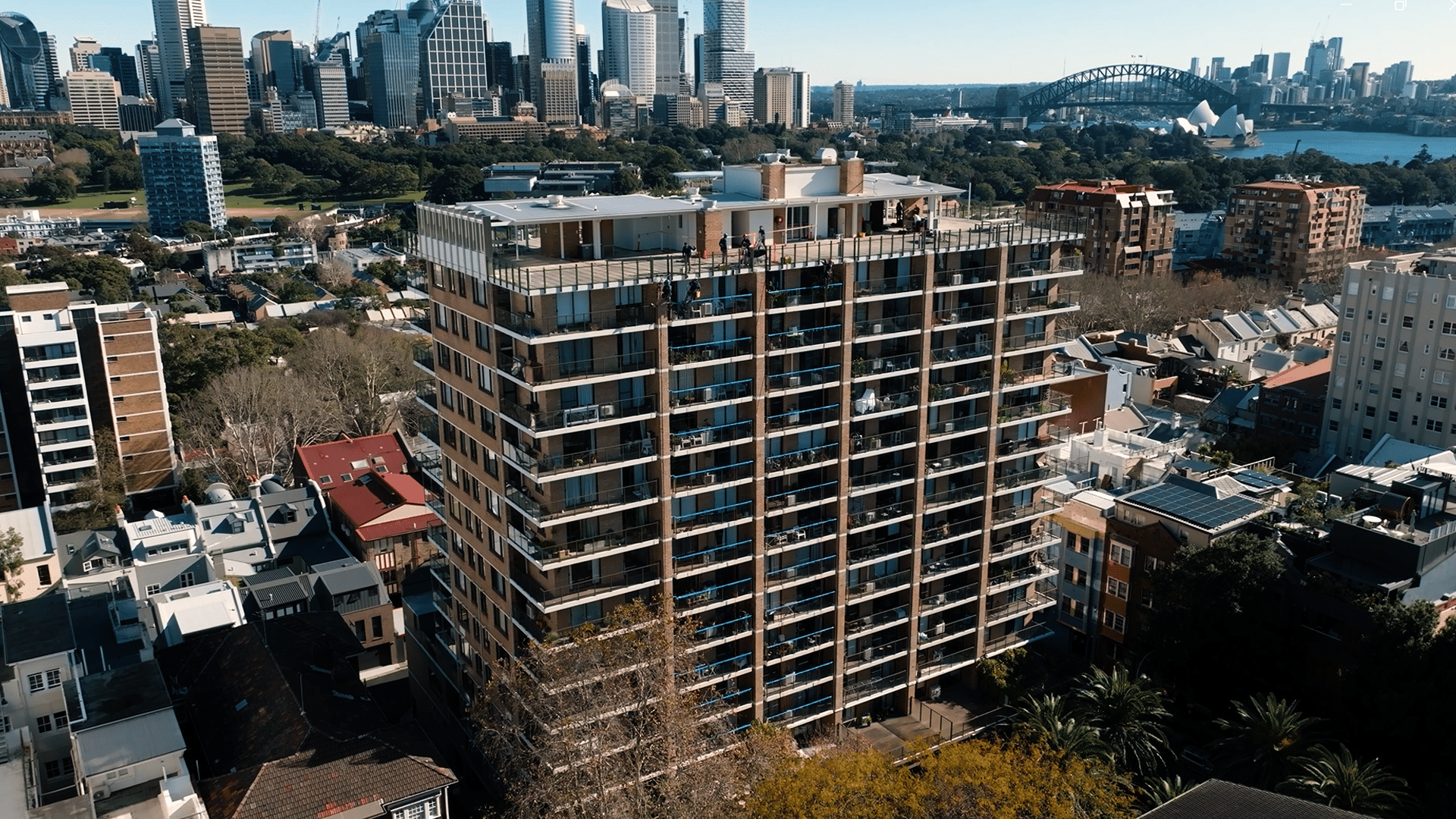
Springfield Tower is a multi-storey residential strata building located in the high-density suburb of Potts Point, Sydney. With multiple elevations, balconies, and direct interface with surrounding footpaths, maintaining the condition of the facade is critical to both resident safety and the public environment below.
Anchor Safe Rope Access was engaged to deliver a staged facade restoration works, starting with a comprehensive facade inspection, followed by remediation works, and concluding with full facade repainting.
Services
Stage 1 – Facade Inspection
A detailed visual and tactile inspection was carried out across all elevations to identify and document building defects. This process established to get an overview and clear direction on priorities, staging, and budget.
The inspection identified a number of defects requiring attention. Tiled window sills were found to be significantly deteriorated, with widespread cracking, loose and missing tiles presenting a clear falling object risk to the public below. A glass balustrade panel was also identified as having dropped within its frame due to fixing failure, highlighting a broader system risk across similar installations.
In addition, concrete spalling and cracking were evident across multiple areas, particularly to balcony slabs, along with deteriorated sealants, loose and damaged brickwork, and other ageing facade elements.
Throughout the inspection, Anchor Safe’s mobile app was used to record defects, track progress, and provide Sydney Building Management & Projects with real-time updates, enabling remote monitoring and informed decision-making at every stage.
Stage 2 – Restoration Works
Following the inspection, Anchor Safe Rope Access was engaged to undertake the recommended remediation works.
Priority was placed on addressing safety-critical items, with immediate action taken to eliminate falling object risks and secure all compromised elements.
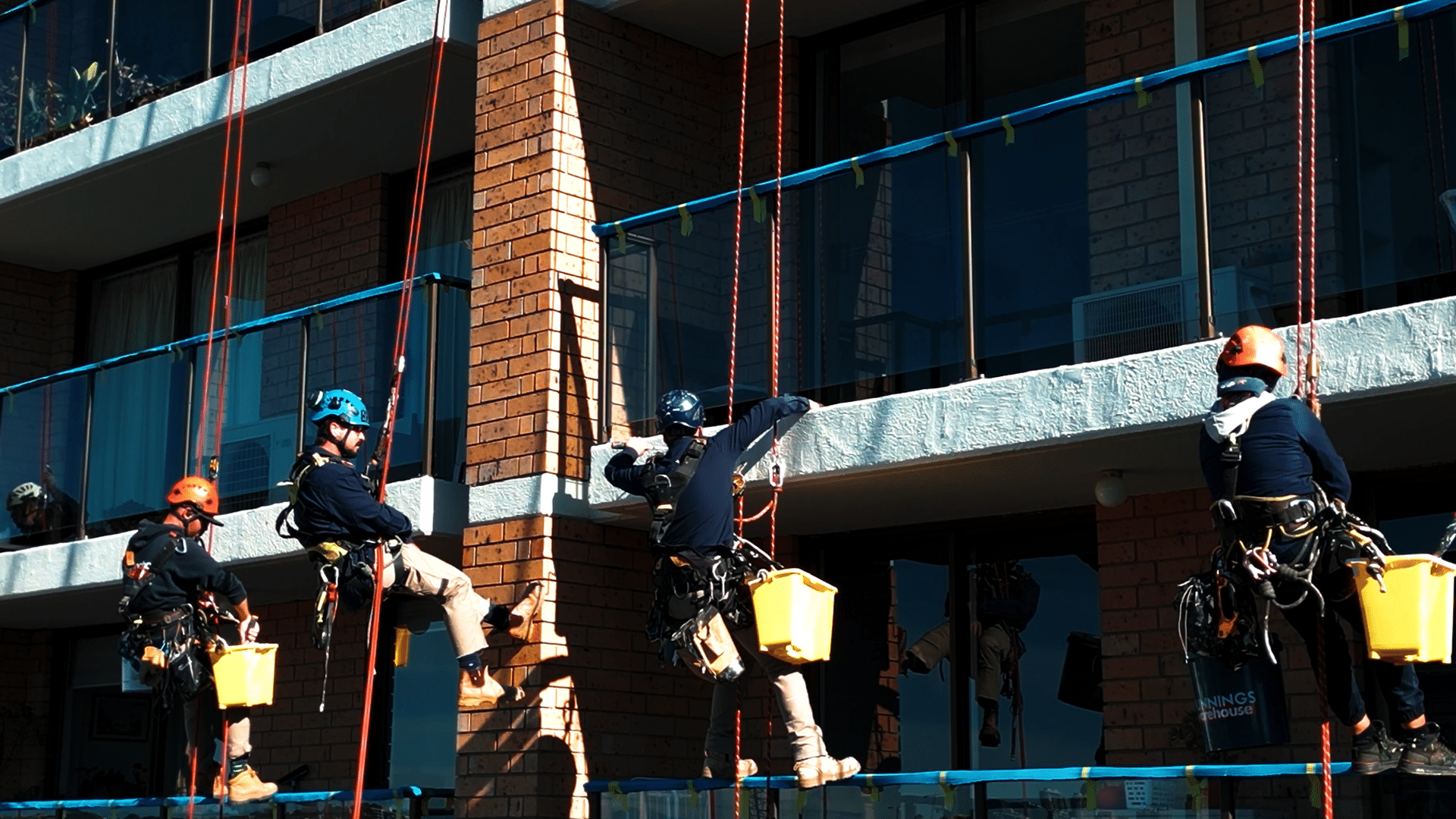
Tiled window sills were rectified with a more robust fixing solution, and all balustrades were upgraded with additional restraint to prevent panel movement. Concrete repairs were carried out across affected areas to reinstate structural integrity, while loose and damaged brickwork was repaired or replaced. Sealant joints were reinstated to prevent water ingress, and corroded components, exposed services, and other defects were brought back to a safe and compliant condition.
Key restoration services included:
- Tiled Window Sill Remediation:
With approximately 90% of tiled sills found cracked, loose, or missing, a permanent solution was implemented to eliminate falling object risks and ensure long-term stability. - Glass Balustrade Safety Upgrades:
Structural improvements were carried out to prevent glazing panels from dislodging, including the installation of additional securing mechanisms to mitigate design-related risks. - Concrete Spalling & Crack Repairs:
Extensive repairs were undertaken across all elevations, particularly to balcony slabs, restoring structural integrity and preventing further deterioration. - Brickwork & Masonry Repairs:
Loose, cracked, and missing bricks were repaired or replaced, including crack stitching using appropriate systems to reinforce structural performance. - Sealant & Waterproofing Works:
All deteriorated and missing sealants were replaced, and critical joints were sealed to prevent water ingress. - General Façade Make-Safe Works:
Additional defects including corroded fixings, exposed services, deteriorated mortar, and missing elements were rectified to bring the façade up to a safe and compliant standard.
Stage 3 – Repainting & Finishes
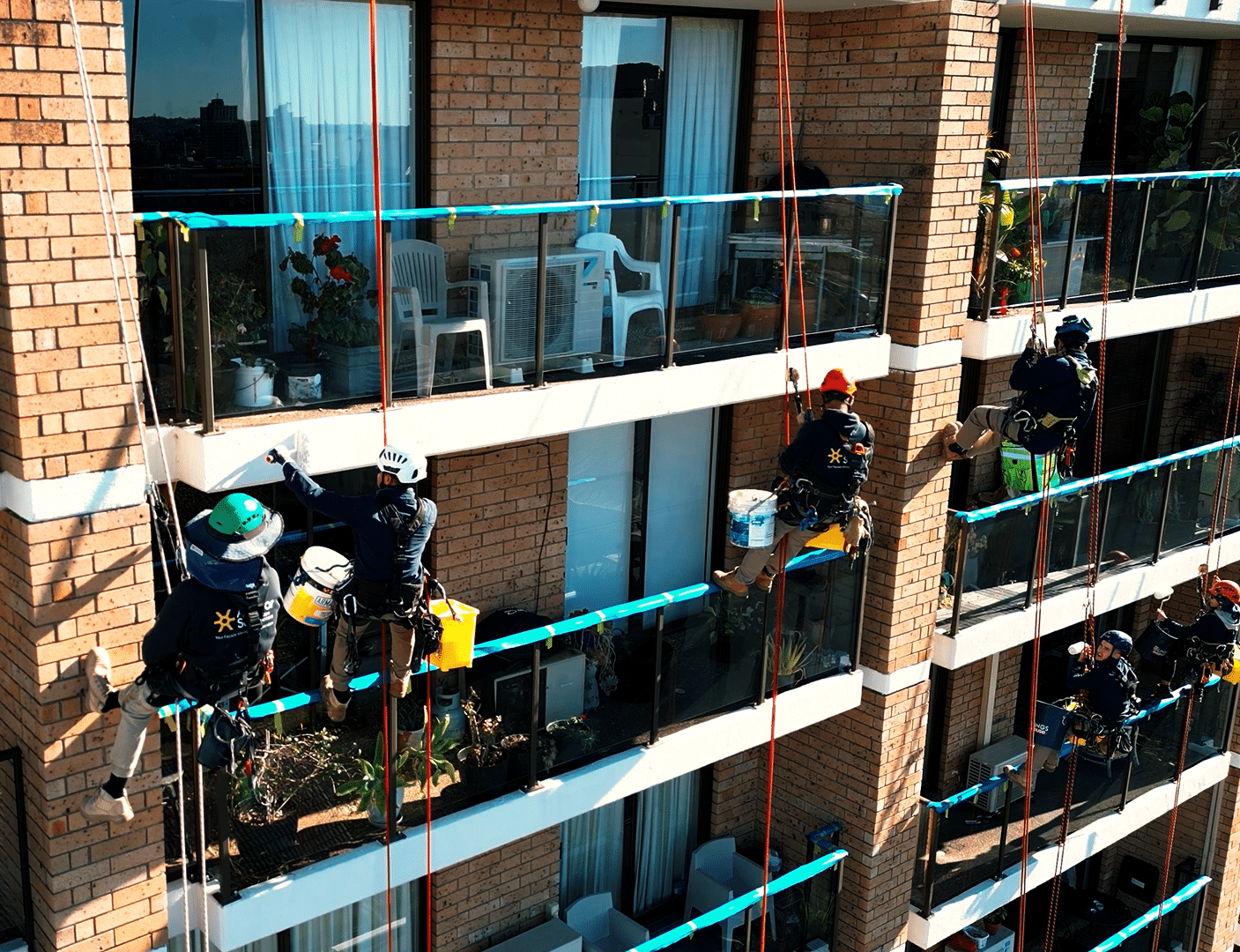
Upon completion of remediation works, the building underwent full facade repainting. Protective coatings were applied to external surfaces to provide a consistent finish and extend the service life of the facade.
The works delivered a consistent, well-maintained finish across all elevations and established a clear baseline for ongoing maintenance.
Results
The staged approach allowed Springfield Tower to transition from reactive repairs to a more structured and proactive maintenance position.
Immediate safety risks, including falling object hazards from tiled sills and unsecured elements, were addressed early in the program, reducing risk to residents and the public. Structural issues such as concrete spalling and cracking were stabilised, improving the overall integrity of the facade.
Water ingress risks were reduced through the replacement of failed sealants and sealing of exposed joints, while facade repairs and repainting significantly improved the building’s external presentation.
As a result, the Building Facility Management now benefits from a safer, more compliant building with improved durability and a reduced likelihood of ongoing reactive maintenance.

Anchor Safe Rope Access have done outstanding work and have been easy to communicate with throughout the project. The report they provided was very detailed, clearly showing before-and-after photos and outlining the work carried out on the building.
I’d definitely recommend Anchor Safe Rope Access to other building managers.”
Libby Cash, Building Manager | Sydney Building Management & Projects